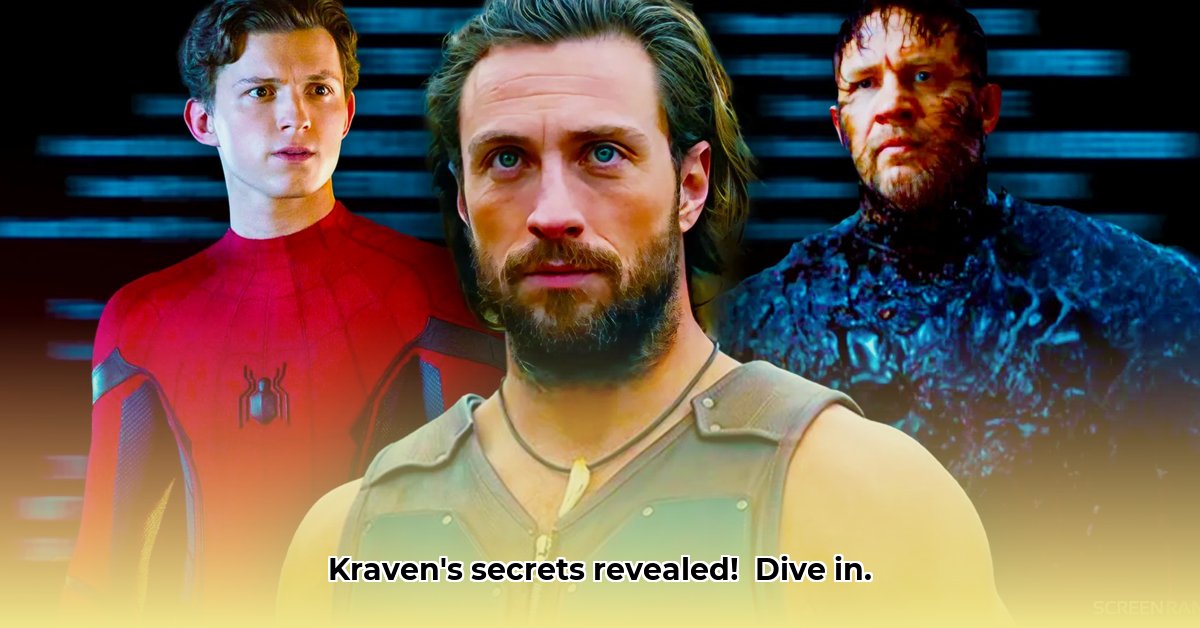
Kraven The Hunter's Cast: A Production Deep Dive
Right from the get-go, Kraven the Hunter's production screams "big budget". The sheer scale of the visual effects (VFX) crew alone points to a massive investment in CGI-heavy action sequences. But what about the cast? How does this impressive VFX team size compare to the number of actors? This ratio offers valuable insights into the filmmakers' budgetary priorities and the overarching narrative strategy.
A further complication emerges from discrepancies in cast and crew numbers reported across different online movie databases such as IMDB and TMDB. This discrepancy highlights the inherent challenges in sourcing completely accurate production data. Thorough investigation is needed to reconcile these figures and understand the source of the inconsistencies. Does this reflect actual variations in team size over the production process? Or are data entry errors at play? Only further investigation can reveal the truth.
The Cast's Role: Shaping the Narrative Arc
The relatively smaller cast size compared to the massive VFX team suggests a narrative emphasis on visual spectacle, with individual actors potentially playing more concise roles in the overall story arc. This raises a crucial question: Will the reduced focus on character development be adequately offset by the visual effects extravaganza? Audience response will ultimately dictate the success of this approach. Does a smaller cast necessarily translate to a less engaging narrative? That remains to be seen.
Budget Breakdown: Balancing VFX and Talent Costs
A substantial investment in VFX inherently necessitates a significant portion of the production budget be allocated to post-production. How much precisely? A smaller cast might mitigate some of this expenditure on salaries and other actor-related costs, thus potentially balancing out the VFX budget. However, this raises further questions regarding the relative investment in developing the narrative, character arcs and the screenplay itself. Could the story be considered secondary to the visual spectacle? Only the box office performance and critical reception can truly answer this.
The VFX Challenge: Managing Risk in Post-Production
Producing a VFX-heavy film poses significant challenges, including potential cost overruns and post-production delays. Last-minute changes, technical glitches, and unforeseen complications are all inherent risks. The scale of the VFX work represents considerable responsibility, with delays potentially impacting the film's budget and release date. This massive undertaking critically relies on effective project management and contingency planning.
Risk Assessment: Identifying and Mitigating Potential Threats
Let's examine the key potential risks facing Kraven the Hunter:
| Risk Category | Likelihood | Severity | Mitigation Strategy |
|---|---|---|---|
| VFX Budget Overruns | High | High | Rigorous VFX planning, detailed budgeting, and contingency funds for unforeseen expenses. |
| Post-Production Delays | Moderate | High | Streamlined workflows, proactive problem-solving, and robust scheduling. |
| Negative Audience Reception | Moderate | High | Targeted marketing campaigns, pre-release screenings, and audience feedback integration. |
| Box Office Underperformance | Moderate | High | Strategic marketing, diversified revenue streams (merchandise etc.), and strong distribution deals. |
Industry Trends: Reflecting Current Superhero Cinema
Kraven the Hunter's production reflects a broader trend within the superhero genre – a marked emphasis on visual spectacle and technological prowess. The film prioritises impressive CGI sequences over character-driven narratives. This strategy represents a calculated risk, and whether this approach will resonate with audiences remains to be seen. It's a significant departure from previous superhero films that focused more on the strength of character and storyline. The smaller cast size compared to the massive VFX team directly reflects this shift in focus.
Conclusion: A Calculated Gamble?
Kraven the Hunter's production strategy presents a stark contrast: a smaller cast coupled with an immense VFX team. This approach prioritises visual effects over character development, a calculated gamble that could yield either spectacular success or significant disappointment. Understanding the budgetary implications and mitigating potential risks were undoubtedly crucial in this production. The film’s success or failure will likely inform future decisions within the superhero genre. The careful analysis of the production of Kraven The Hunter, including its cast and VFX composition, offers critical lessons for future filmmakers navigating the complexities of the modern blockbuster landscape.